

Family Mediation vs Court: Which Is Right for You?
The average family mediation cost in the UK is around £750 per person (about £1,500 for the couple), compared to £5,000 to £30,000+ per person for a contested court case. Mediation and court are the two main routes for settling arrangements about your children and finances when you separate — and for most couples, mediation is faster, cheaper and less stressful, because you agree the outcome together rather than having a judge impose it. If you and your ex-partner cannot agree, those are your two main options. There are also less common routes, including family arbitration and collaborative law, which we cover further down this guide. This article compares the cost, speed, and emotional impact of each approach so you can make an informed decision about the right process for your family’s future, whether you are facing a divorce, a separation, or a dispute about children.
What Is Family Mediation?
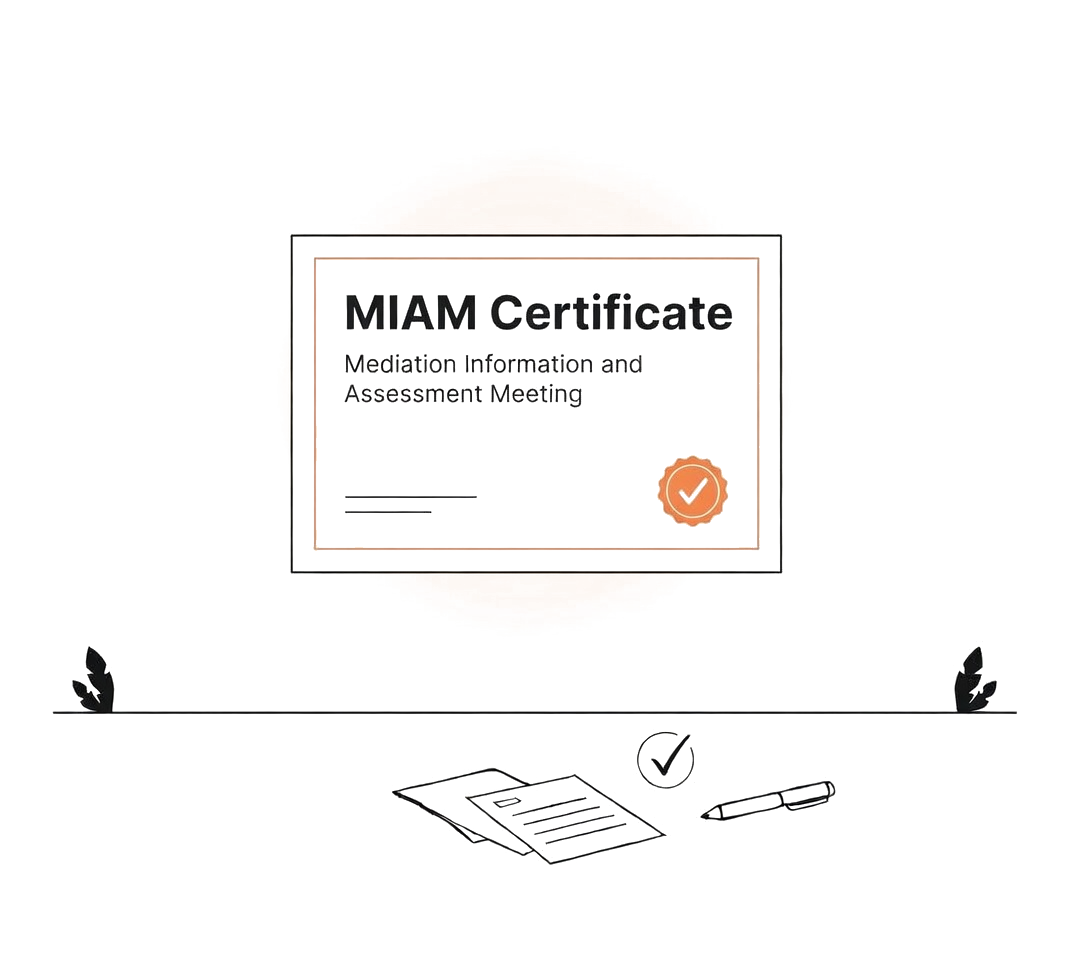
Family mediation is a voluntary process where a trained, impartial mediator helps you and your ex-partner reach your own agreement about children, finances, or both, without a judge deciding for you. It starts with a Mediation Information and Assessment Meeting (MIAM), a private one-to-one meeting where your mediator explains how the process works and checks whether mediation is suitable for your situation.
In the UK, family mediators are accredited by professional bodies such as the Family Mediation Council, which sets standards of training, conduct, and practice. Choosing an accredited mediator means you are working with someone qualified to help you reach a fair, workable agreement.

The Mediation Process: What to Expect
After your MIAM, if both parties agree to take part, joint mediation sessions are arranged. Most families need two to four sessions to reach an agreement. The process is flexible: sessions can happen online, in person, or through shuttle mediation if you would rather not be in the same room as your ex-partner. Unlike rigid court timetables, mediation sessions are booked around your schedule, not the court’s.
Cost: Mediation vs Court
Cost, and how much money you are likely to spend, is one of the biggest reasons families choose mediation over a contested divorce. The cost of mediation is fixed and transparent, while litigation costs can escalate quickly and are hard to predict in advance.
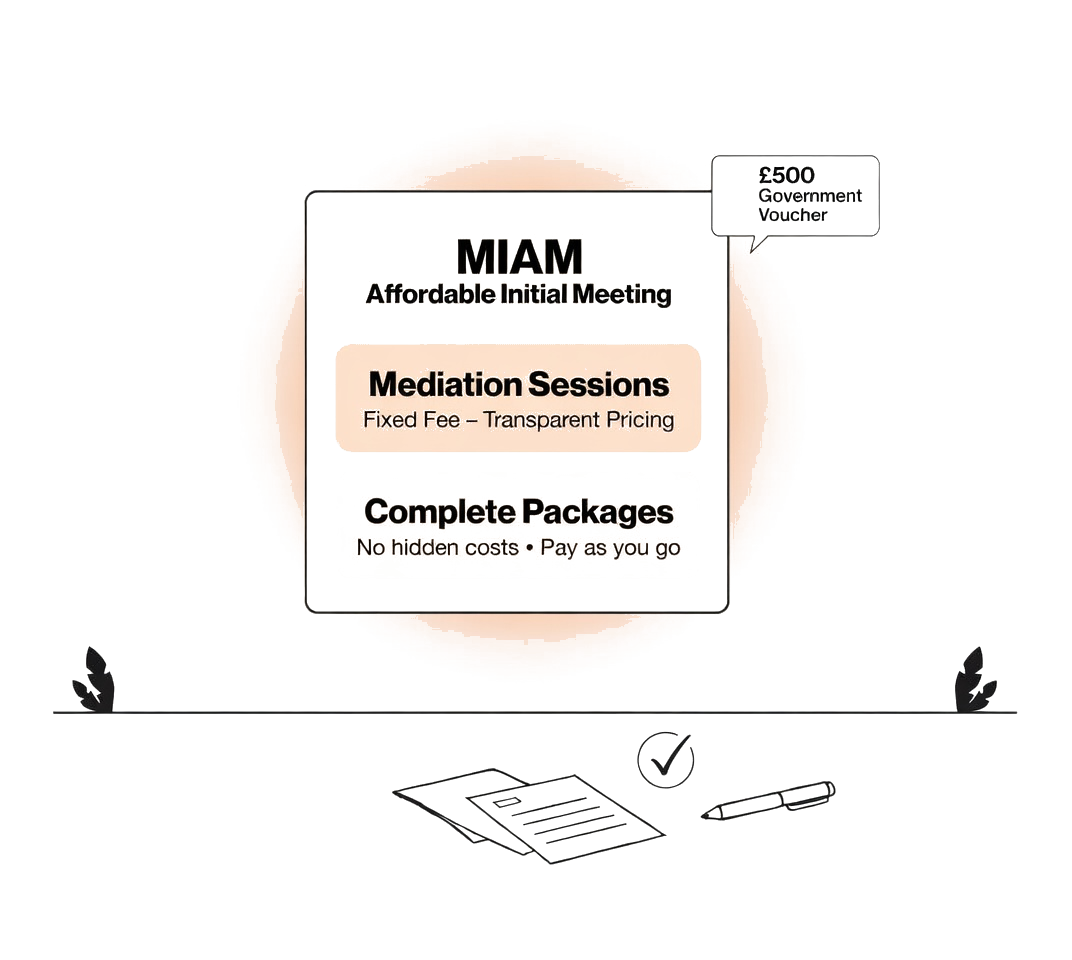
- Mediation: A MIAM costs around £125 per person. Joint mediation sessions typically cost £180 per person per session, and most cases are resolved within 2 to 4 sessions. Total cost for both parties is usually under £2,000, whether you are resolving child arrangements, dividing the family home and other property, or agreeing a full financial settlement as part of your divorce.
- Court: The C100 court fee alone is £263. Solicitor fees for court representation and litigation can range from £5,000 to £30,000 or more per person, depending on the complexity and length of the case.
BookMIAM is not able to offer legal aid for mediation. However, legal aid may still be available to cover a solicitor’s advice or representation in court proceedings, particularly in cases involving domestic abuse, so it is worth checking your eligibility with a family law solicitor if your case is heading to court. For mediation itself, the main source of financial help is the government voucher scheme below.
The Family Mediation Voucher Scheme
The Ministry of Justice Family Mediation Voucher Scheme is a government contribution designed to make mediation more affordable. It covers up to £500 per family towards the cost of mediation on child arrangements, including child inclusive mediation, where an eligible dispute is being resolved. The voucher is not paid to you directly; a fully accredited FMC mediator on our team claims it on your behalf once your case is assessed as eligible. It will not cover every case, so ask your mediator at your first mediation meeting whether you qualify for the voucher.

Time: How Long Does Each Process Take?
Mediation is much faster than court proceedings for most families.
- Mediation: Most cases are resolved within weeks or a few months. Sessions are booked at times that suit both parties, rather than being dictated by court timetables.
- Court: Family court cases typically take 6 to 18 months, and complex cases can take longer. There are often long waits between hearings, and the process involves preparation of statements, Cafcass reports, and multiple court appearances.
If you are weighing up your options, speed is often one of the clearest reasons to try mediation before starting litigation.
Ready to take the next step? Book your MIAM online today.
Book Your MIAMControl: Who Decides the Outcome?
Who makes the final decision is one of the clearest differences between mediation and court.
- Mediation: You and your spouse or ex-partner decide the outcome together, with the help of a trained mediator. You are in control of the agreement, and the process encourages a collaborative approach rather than an adversarial one.
- Court: A judge makes the decision for you, based on the evidence and arguments presented. You may not get the outcome you want, and a court order is imposed rather than negotiated.
Because you help shape the agreement yourselves, mediation tends to build more trust in the outcome than a decision handed down by a judge. Many people also find it easier to plan for the future when they have had direct input into the arrangements for their children or their money.

Stress and Conflict
How much conflict and stress each route creates is another important factor to weigh up.
- Mediation: The process is collaborative and focused on finding solutions. It is designed to reduce conflict, not increase it, and it takes a more constructive approach to a difficult situation.
- Court: Court proceedings are adversarial by nature. Each side presents their case and challenges the other. This can increase hostility and damage any remaining relationship between the parties, which matters if you will need to co-parent in the future.
Impact on Children
For most parents going through a divorce or separation, the impact on their child is the most important consideration of all.
- Mediation: Children are shielded from the process. Mediation reduces parental conflict, which research consistently shows is the most important factor in a child’s wellbeing after separation. Where appropriate, child inclusive mediation gives an older child a safe, age-appropriate space to share their views.
- Court: A child may be interviewed by a Cafcass officer, asked about their wishes and feelings, and become more aware of the conflict between their parents.
Whichever route you choose, keeping the focus on your child’s needs, rather than on winning an argument, tends to produce arrangements that last. A calm, child-centred process now can make a real difference to your child’s future.
Confidentiality
Privacy is another area where mediation and court differ significantly.
- Mediation: Everything discussed is completely confidential and cannot be used in court.
- Court: Court proceedings are formal and on record. Statements and evidence become part of the court file, and in the rare cases that reach a full trial, the arguments on both sides are heard in open court.
Enforceability: Is the Outcome Legally Binding?
Finally, it is worth understanding whether the outcome you reach will actually be binding.
- Mediation: Agreements reached in mediation are not automatically legally binding, but they can be made binding through a consent order. Research shows that mediated agreements are more likely to be followed because both parties had a say in the outcome.
- Court: Court orders are legally binding and enforceable. However, enforcement applications are common when one party does not comply, leading to further cost and conflict.
Getting a Court Order After Mediation
If you reach an agreement in mediation, your mediator will prepare a memorandum of understanding summarising what you have agreed. For financial matters especially, particularly after a divorce, it is strongly recommended that this is turned into a consent order, a court order that makes your agreement legally enforceable. Separation agreements and parenting plans dealt with this way combine the flexibility of mediation with the legal certainty of a court order, without the cost of a contested trial.
Alternatives to Court: Arbitration and Collaborative Law
Mediation is not the only alternative to court. For many legal disputes, if you want to avoid litigation but mediation alone will not resolve every issue, family arbitration and collaborative law are two other forms of alternative dispute resolution worth knowing about.
Family Arbitration
Family arbitration works differently from mediation. Instead of helping you reach your own agreement, an arbitrator listens to both sides and then makes a binding decision, similar to a private judge. Arbitration is run in the UK under the Institute of Family Law Arbitrators (IFLA) scheme, and it is often used to resolve a specific sticking point in an otherwise successful mediation, or for financial cases where a guaranteed decision is needed without the delay of court dispute resolution. Because arbitration produces a binding outcome, it suits people who want the certainty of a decision but without the time and cost of a full court process.
Ready to take the next step? Book your MIAM online today.
Book Your MIAMCollaborative Law
Collaborative law is another option, particularly if both people want legal advice at every stage. Each person instructs their own collaboratively trained solicitor, often from a family law team at a local law firm, and everyone meets together in a series of face-to-face meetings to negotiate a settlement. Both sides sign an agreement committing to resolve matters without going to court, which encourages an honest, solution-focused approach. Resolution, the organisation that trains and accredits many family law professionals in England and Wales, sets the standards collaborative lawyers work to.

When Court May Be Necessary
Mediation, arbitration, and collaborative law are not suitable in every case, and there are good reasons why court remains the right route for some families, whether the dispute relates to divorce, finances, or children. Court, or an urgent application for a court order, may be necessary if:
- There is domestic abuse or a safeguarding risk. Mediation is not appropriate where domestic abuse is present, and a MIAM exemption will usually apply.
- The other party refuses to engage in mediation, arbitration, or the collaborative process.
- There is an urgent need for a court order, for example to prevent a child being taken abroad.
- One party is hiding assets or being dishonest about their finances, which can undermine trust in any out-of-court process.
If any of these apply to you, it is important to get legal advice quickly so you understand your legal rights and the options available for your specific circumstances.
Getting Legal Advice Alongside Mediation
Mediation does not replace independent legal advice, and a good mediator will encourage you to speak to a solicitor at key points in the process, particularly before signing a financial agreement as part of your divorce. Your mediator cannot advise either of you individually, since their role is to remain impartial, but they can explain the mediation information you need and signpost you to further help.
Many people choose to get advice from a family law solicitor or a family law team at the start of the process, so they understand their legal rights before negotiations begin, and again at the end, before turning their agreement into a court order. If you are eligible for legal aid, this can sometimes reduce the cost of that advice, even where it does not cover mediation itself.
Is Mediation the Cheapest Way to Get Divorced?
Yes. When there are disputes about children or finances, mediation is consistently the cheapest way to get divorced in the UK. The total cost for both parties is usually under £2,000, compared to £5,000 to £30,000 or more per person for contested court proceedings with solicitor representation. For most divorcing couples, that difference represents a significant amount of money that can instead go towards rebuilding separate households after your divorce settlement.
At BookMIAM, MIAMs cost a fixed fee of £125 per person and mediation sessions cost £180 per person. Even with a memorandum of understanding (£300 per person), the total is a fraction of solicitor fees for a divorce that goes all the way to a contested trial.
How Long Does Family Court Take in 2026?
Family court cases in 2026 typically take 6 to 18 months, and complex cases involving financial disputes or contested child arrangements can take significantly longer. Court backlogs remain substantial across England and Wales, with some regions reporting average wait times of over a year for a final hearing.
By comparison, mediation can often be concluded within 6 to 12 weeks.
What Happens at the First Family Court Hearing?
The first hearing is called a FHDRA (First Hearing Dispute Resolution Appointment). It is a short hearing, usually 30 to 60 minutes, where the judge reviews the Cafcass safeguarding letter, hears briefly from both parties, and attempts to help you reach an agreement. If no agreement is reached, the judge gives directions for the court process to continue, which may include ordering reports, requesting evidence, or listing further hearings.
Ready to take the next step? Book your MIAM online today.
Book Your MIAMBenefits and Advantages of Mediation Over Litigation
Taken together, the advantages of mediation over litigation are significant for most separating and divorcing families. The benefits of mediation include lower cost, a faster process, greater privacy, and less damage to the relationship between parents, which helps when you need to keep working together as co-parents.
Unlike a personal injury claim or a commercial dispute, family cases usually involve an ongoing relationship, especially where children are involved, which is exactly why a cooperative process tends to produce better long-term results than a fight decided by someone else. Successful mediation also tends to produce agreements that both people actually stick to, because they helped design them rather than having them imposed. For most families, that combination of help, control, and lower cost is why mediation is worth trying before court.
Related Guides
- How Mediation Works
- What Is a MIAM?
- C100 Form Guide
- Divorce Mediation
- Online MIAM
- £500 Voucher Scheme
- Pricing
Want to try mediation first? Book a free 15-minute chat to find out if it is right for your situation.
Frequently Asked Questions
Is mediation cheaper than going to court?
Yes, significantly. Mediation typically costs under £2,000 total for both parties. Court proceedings with solicitor representation can cost £5,000 to £30,000 or more per person.
Is mediation faster than court?
Yes. Most mediation cases are resolved within weeks or a few months. Family court cases typically take 6 to 18 months, and complex cases can take longer.
Can the other party refuse mediation?
Yes. Mediation is voluntary and both parties must agree to take part. If the other party refuses, a fully accredited FMC mediator on our team will sign your court form confirming this so you can proceed with your application.
Is a mediation agreement legally binding?
Not automatically. However, you can make your agreement legally binding by having it turned into a consent order, which is approved by the court. This is strongly recommended, especially for financial agreements.
How long does family court take in 2026?
Family court cases typically take 6 to 18 months. Complex cases can take longer. Mediation can often be concluded within 6 to 12 weeks.
Is mediation the cheapest way to get divorced?
Yes. Mediation typically costs under £2,000 total for both parties, compared to £5,000 to £30,000+ per person for court with solicitor representation.
Is mediation better than court?
For most families, yes. Mediation is cheaper, faster, more private, and gives you control over the outcome rather than leaving the decision to a judge. However, mediation is not right for every case — if there is domestic abuse, a safeguarding risk, or one party will not engage, court may be the more appropriate route.
Can I skip mediation and go straight to court?
In most cases, no. You are required to attend a MIAM before applying for a child arrangements order (C100) or a financial order (Form A), unless a valid exemption applies, such as domestic abuse, urgency, or child protection concerns. Your mediator can confirm whether an exemption applies to your situation.
What are the disadvantages of mediation?
Mediation relies on both parties being willing to engage constructively and disclose information honestly, so it is not suitable if there is domestic abuse, a significant power imbalance, or if one party is hiding assets. Agreements are also not automatically legally binding, so you may need a consent order afterwards to make them enforceable.
What is the difference between mediation and tribunal?
There is no separate ‘family tribunal’ in England and Wales — family disputes are dealt with by the Family Court, not a tribunal. Tribunals handle specific areas of law such as employment, immigration, or benefits appeals. Mediation, by contrast, is a voluntary, out-of-court process where you and the other party reach your own agreement with a mediator’s help, rather than a third party deciding for you.
Is mediation a real alternative to family court for child and money matters?
Yes — for most separating couples it is the better route. Mediation lets you decide child arrangements and finances together, rather than having a judge impose them, and it is faster, cheaper and less combative. The court expects you to attend a MIAM to consider mediation before it will hear most child or financial applications.

Written by
Abdul Wahid
FMA trained family mediator, registered with the Family Mediation Council. Over 10 years of experience helping families and businesses resolve disputes through mediation.
Related Articles

Reconciliation Mediation
Structured, neutral mediation for couples who want to work through their differences and rebuild their.

Stealing From the Children: The Time They Never Get Back
Family court cannot give a child back the time they lose waiting for a decision..

How to Survive Family Court: The Journey I Wish Someone Had Explained to Me
A personal account of going through family court after losing contact with my children: mediation,.